Safety

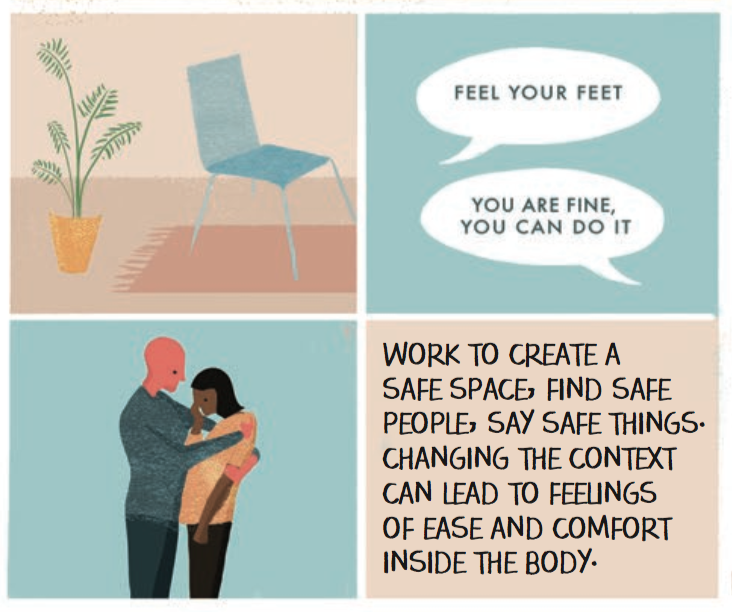
Four Ways to Embody Safety for Yourself and Your Clients

Four Ways to Embody Safety for Yourself and Your Clients

I’m a passionate advocate for embodiment. Human beings function best when they’re connected, present, not dissociated and able to be coherent with what’s happening inside them and what’s happening around them. This is an ongoing negotiation. In my clinical practice,...
read more
Four Ways to Soothe Your Inner Guard Dog (Trauma)

Four Ways to Soothe Your Inner Guard Dog (Trauma)

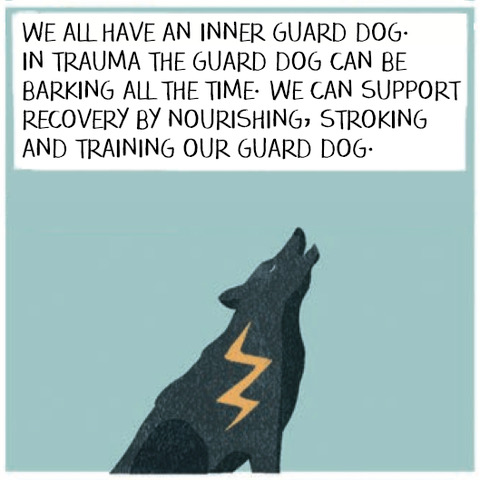
When people think of trauma, they often think of psychological problems. The radical shift we’ve made through studying trauma is understanding that trauma is primarily about physiology. When we experience trauma, we get stuck in protective reflexes - gestures of...

read more
Exploring Body Centred Countertransference

Exploring Body Centred Countertransference

Overview Connection to the body is the foundation of connection to self, connection to others, and connection to the natural world. Transference is when feelings, attitudes, associations originally experienced with important people from the past are transferred onto...
read more
Links between pain and trauma

Links between pain and trauma

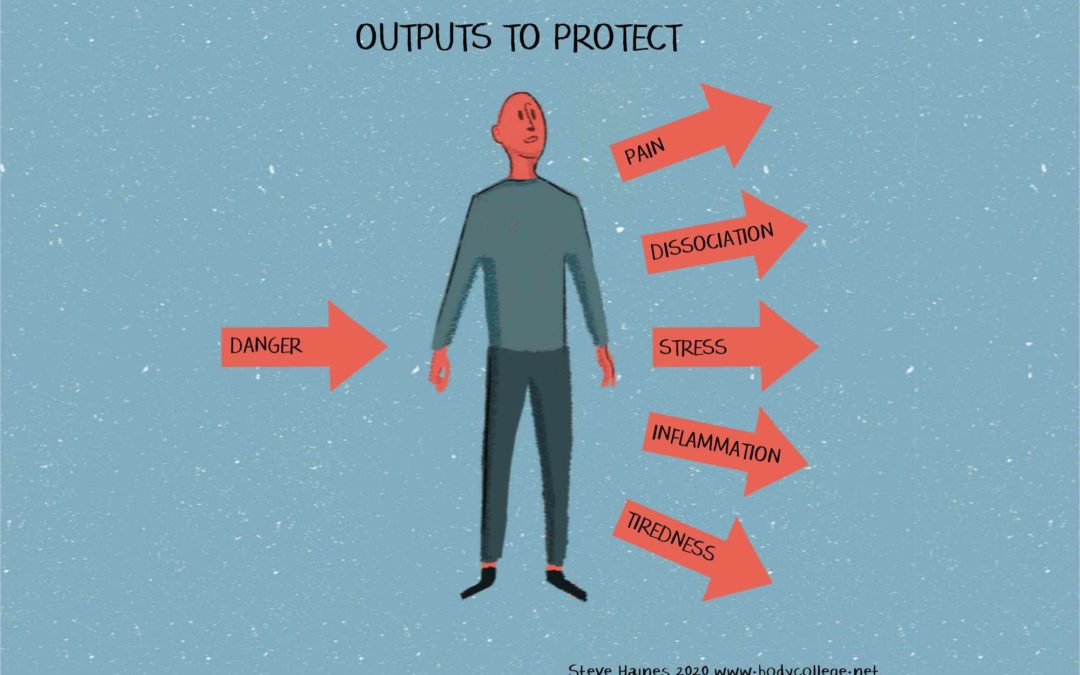
Links between pain and trauma Polyvagal theory developed by Dr Stephen Porges is very influential in the trauma world. The essence of polyvagal theory is that feeling safe is the fundamental drive for humans. If there is the perception of danger ('neuroception' is the...

read more
How to Find Safety During the Pandemic

How to Find Safety During the Pandemic

The amount you’re affected by an unprecedented event like this current pandemic depends on your resources and your relationship to health. We all do the best we can, given our history and current circumstances. Many of our responses are rooted in primitive reflexes...

read more

Finding Safety: Trauma, the Body & Steve Haines (2020)

Finding Safety: Trauma and the Body What is trauma? When your physiology is stuck, you are stuck. Trauma can be defined as being stuck in protective reflexes. Dissociation is a protective reflex most people are unaware of. In my experience, most people dissociate most...

read more
Steve Haines: Trauma, Feelings & Bodywork (Dec 2019)

Steve Haines: Trauma, Feelings & Bodywork (Dec 2019)

Here is podcast of me being interviewed by Mark Walsh. At the start there is some framing of how I believe cranial work works, the importance of feeling and the limits of energy models. For TRE folks at 00:34:30 we discuss TRE, including some responses to critiques of...

read more
How to Create Safety in Trauma Healing?

How to Create Safety in Trauma Healing?

The very nature of trauma is that it is overwhelming - it’s more than the organism can cope with. Trauma shatters our worldview and rules of fairness and justice no longer seem to apply. Trauma often leads to a spiritual crisis and a profound re-evaluation of meaning....

read more
Nothing Works All the Time, Some Things Sometimes Do

Nothing Works All the Time, Some Things Sometimes Do

Anything can work some of the time. Nothing works all of the time. This phrase works really well to illustrate the complexity of working with pain. Pain is dependant on multiple, diverse, interacting variables. Pain is a perception due to the interplay of biological,...

read more
Liberated Body 2014: Body Maps & Interoception

Liberated Body 2014: Body Maps & Interoception

https://www.liberatedbody.com/podcast/steve-haines-lbp-015/ 'Steve Haines talks about biodynamic craniosacral therapy, body maps and how they become strange or distorted. Interoception and why there is more pain in areas that are more poorly mapped. The huge role the...

read more
Welcome to Body College

Welcome to Body College

Learn how to feel Body College is dedicated to body-based tools, back by science, to change anxiety, pain and trauma. The most important decisions your brain is making are 'Am I safe?' and 'How much energy is it going to cost me to respond'. We are constantly...

read more